
Mark Cocker
'It takes a whole universe to make the one small black bird'
Volunteers ’23
In 2022 I remember how a major wildlife charity published with great fanfare a list of its favourite celebrities. Celebrities? I was …. unimpressed. With very few, notable exceptions, celebrities are to action-for-nature what bush tucker (off that god-awful tv programme) is to nature-connectedness. In short, the absolute inverse of what’s truly important. Much of the amazing work for nature is done by people who never ask for thanks, or attention, or even money. They are amateurs in its original (not in its derived) sense of lovers! They simply love wildlife. I’ve taken it upon myself to pay a little attention and offer small thanks to some of the remarkable people I’ve noticed or met in the last 12 months. Here are my choices.
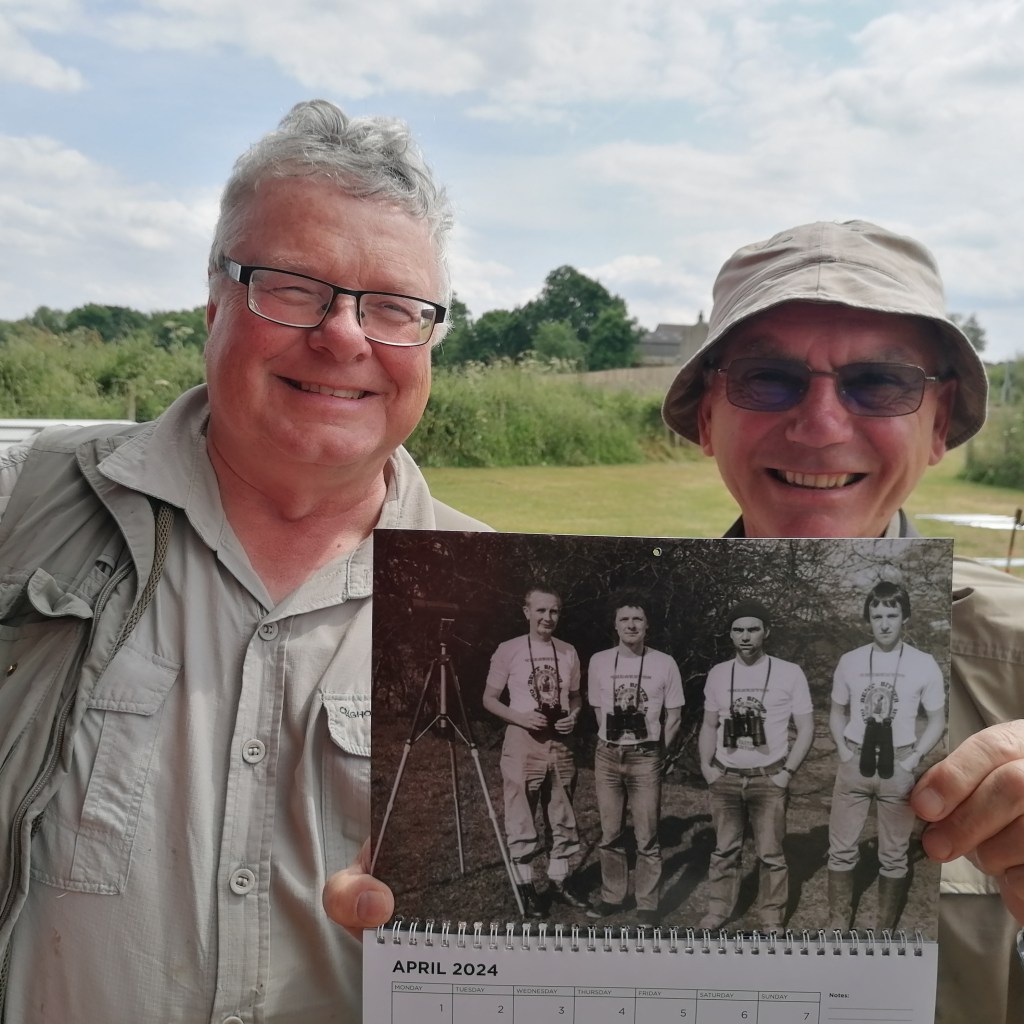
First up: Colin Slator (right and behatted) with his long-time pal Stephen Worwood. The pic that Colin is holding (they are the middle two, looking suspicious) is from 40 years ago. Just before that period, Colin, aged 21, walked up to the door of the owners of High Batts, an area of riverine woodland on the banks of the Ure near Ripon. He asked them if he could rent it to look after the place for wildlife. A half century later there is a large network of local volunteers doing great stuff for wildlife at High Batts – events, recording, habitat improvement etc etc. The whole community is an exemplary expression of the Big Society. Many of them, Colin and Stephen included, are still doing it. It is, by anyone’s standards, an amazing achievement. I would suggest that it is more typical of how nature is being protected and valued in Britain. I wrote a little more about High Batts in the Guardian here.
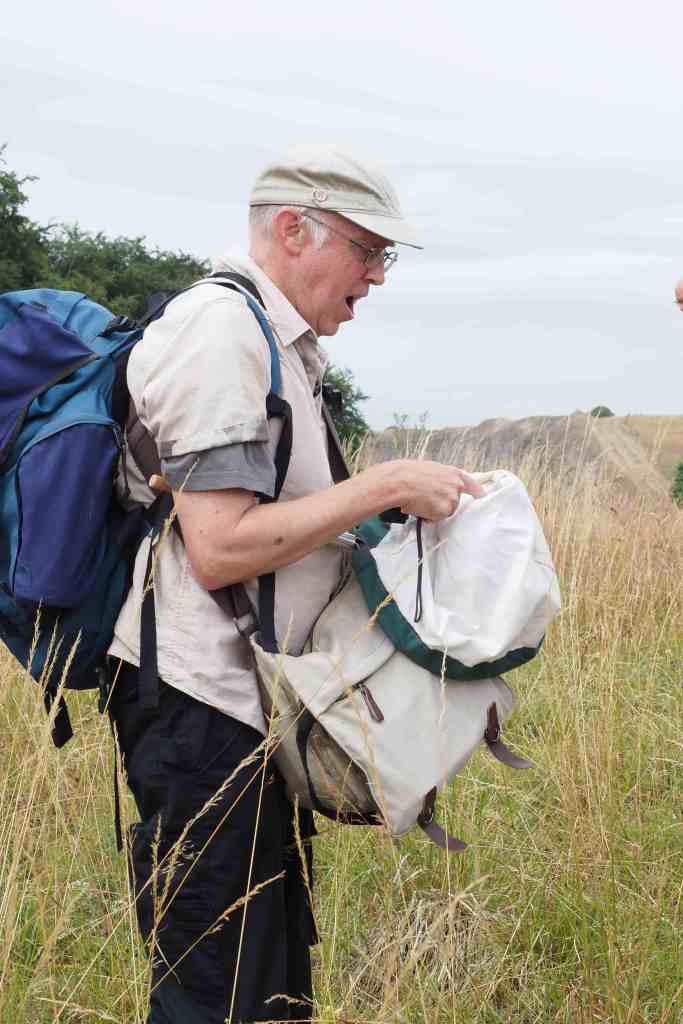
Next comes Jonathan Mortin, whom i have known from school days, when we were aged about five. Jonny is one of those remarkable all-round naturalists, who has a special affinity with neglected taxa that hide under rocks or beneath bark. He cherishes what most people ignore or even despise. But he also loves and celebrates insects, plants, arachnids, crustacea, fungi. Most of these he identifies and enters on official website systems (iNaturalist, iRecord) that help to map where UK wildlife is living. Here in Britain we may be more nature depleted than almost all other countries on Earth, but my goodness we know where the last parts are located. It is an essential precondition of almost all meaningful nature action. To date he has logged c11.5k records of 2.8k species on iNaturalist alone. Let me tell you. That is one HELLUVALOT of dedicated recording. One important outcome locally is that he has drawn up an extraordinary map of biodiversity in our neighbourhood, almost singlehandedly (though he has a major partner-in-recording crime in the equally amazing Steve Orridge) involving 100s of hours of work, without any fanfare. It’s amazing. And if you are inspired to do likewise, then he helps run sessions where you can learn how to get to grips with iRecord and iNaturalist. I am now a devotee.

Ruth Tingay is pretty much the entire staff of Raptor Persecution UK as an organisation. Yet it is recognised and valued internationally. She runs a website in the same name, meticulously documenting and investigating and recording for posterity, in the clearest prose, how the shooting-and-killing people of Britain illegally destroy wildlife, but especially raptors. They also kill all sorts of other animals and plants, which are often branded as vermin, including some of our most charismatic animals. Ruth is precise, targetted, relentless. Her work is a marvel. She pretty much defines how one individual can make a huge, and even a national difference. Those who wish to arrest our uplands in a highly impoverished and depleted condition (driven-grouse moors) so they can go on killing for pleasure, really really don’t love her and have at times persecuted her. She has a fantastic back-up team including her good friend Chris Packham (above). As for a celebrity who does great stuff …..


My last great volunteers are a double act. Rachel and Dave Purchase have done really fantastic stuff, building on the work of others, to create for our town (Buxton, Derbyshire) a first rate wildlife group the Buxton Field Club. We are taking action in all sorts of way, partly because of their shared input. Our meetings not only inform and keep members abreast of new ideas and developments, but increasingly the club’s work is making a difference for nature in our area. Jonathan Mortin’s initiative above is amplified and structured by the wider work that Rachel and Dave do for the BFC. we’re also branching out into wider and wider collaboration with other great volunteer groups in our area. All in all, it is another great example of how individuals, working together, make a big difference.
These are my volunteers for 2023. I hope you’ll agree. What they do is not just free but priceless.
 Mark Cocker
Now the two at the head of this article are valued friends, indeed I taught Steve, now a very experienced ringer, to ring 30+ years ago. Volunteers are vital in the conservation sector, and often have that vital local knowledge and experience that education cannot buy. As such local trusts, private NRs and of course national organisations like RSPB and NT rely on them in many ways. BTO is THE volunteer organisation where we amateur naturalists can a nd are guided to do national surveys of various sorts and ringing all vital to the nations knowledge base of our wildlife. Why volunteer, as I do at the Dyfi Osprey Project of Montgomery WT, well not only are you helping the Trust and the Ospreys it is hugely rewarding fun and you learn stuff about all sorts of things.
LikeLiked by 1 person
All environmental effort relies on volunteers Paul. Which can be problematic if you seek to make a living from the field. In truth even professiinals for nature are also volunteering far more than their allocated paid timesheet. But it is, as you say, its own reward. Thank you.
LikeLiked by 1 person
I know that only too well Mark. Having got out of an unhappy life in the chemical industry and gone back to uni to study biology and then worked in turn on contract for RSPB, Lancs Wildlife Trust and Yorkshire Dales NP I then got permanent work for what was then Central Science Laboratory ( part of DEFRA) and still did much of the things I really wanted to do in my spare time. Volunteering and using volunteers is both a strength and a weakness for those organisations reliant on them, whilst in can be quite depressing and discouraging for those wanting paid work in the sector.
LikeLiked by 1 person